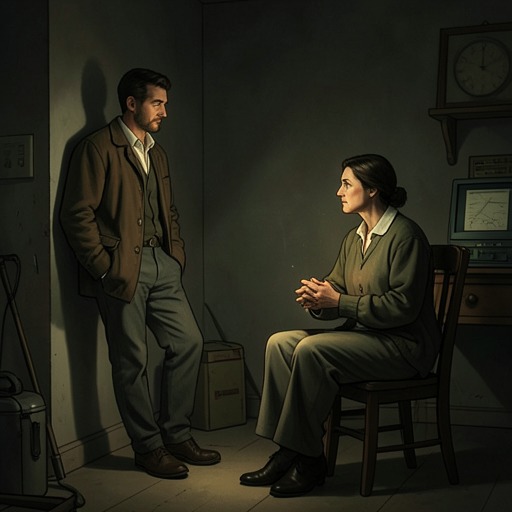
Françoise en quête d’un suicide assisté
Les Choses humainesFrançoise en quête d’un suicide assisté is the state and developing plan in which Françoise, facing a confirmed diagnosis consistent with Alzheimer’s disease, seeks to arrange an assisted death in Switzerland. Her request makes the prospect of cognitive decline a question of autonomy and care: she asks Jean not merely to hear her fear, but to help organize what she regards as a decision about her future.
Diagnosis and the fear of decline
Françoise tells Jean that she is ill after memory problems and confusion in her language have prompted her to seek medical advice. The diagnosis is presented as formally confirmed: alongside an MRI, doctors performed a lumbar puncture, and the markers supported the result. Although it is too early in the exchange to name Alzheimer’s disease definitively, Jean recognizes the symptoms and understands what the diagnosis may entail.
Her response is directed toward the future she fears. Françoise says she does not want to lose her mind or memories, or to be reduced to physical and intellectual decline. She therefore intends to organize an assisted suicide in Switzerland and asks Jean to help. The request is not framed as an immediate act; it is a plan made in anticipation of a course of illness she considers unacceptable.
A request made within a relationship
Jean initially refuses. His answer is abrupt, and Françoise lowers her eyes; he then softens, but does not promise to take her to Switzerland. The disagreement exposes the difference between her attempt to prepare for a feared future and his inability, at that moment, to accept the role she is asking him to take.
Françoise returns to the request while the two discuss Jean’s departure from the newspaper he has loved. She asks him to help her go to Switzerland and to look after Claude. When he says they are not yet at that point, she insists that the arrangements must be made years in advance. She makes assistance a test of intimacy, telling him that if he loves her, he must help her die. The demand places practical responsibility and emotional obligation together: she is asking for help, but also asking Jean to recognize her decision as an expression of her wishes.
The brochure and the practical form of the plan
Françoise directs Jean to take documents from her drawer. After hesitating, he opens it, finds a brochure from an organization offering assisted suicide in Switzerland, and puts it in his pocket. The gesture does not amount to agreement, but it marks a change from spoken request to tangible preparation: Jean takes possession of the information even while saying that he does not know whether he is ready.
The brochure describes an organized process for people with incurable illness or intolerable disability who wish to end their lives. It says that members of DIGNITÉ may ask the association for assistance and describes a lethal barbiturate dissolved in water. Its language presents the process as planned and witnessed: at least two people are to be present, and the person seeking assistance is encouraged to involve loved ones early. The materials call the preparations and farewells a “grand voyage.” Jean rereads the brochure, particularly its assurances about a peaceful death, making the organization’s formal language part of his encounter with Françoise’s request.
Care, preparation, and unresolved outcome
Later, as Françoise’s illness has worsened, Jean continues visiting and caring for her. She has withdrawn from ordinary contact: former colleagues send only impersonal holiday messages, and she is no longer following the newspaper or wider events. During one visit, Jean helps her to the table and serves food he has bought for her; when she finishes, he helps her back to her chair. These ordinary acts of assistance place her changing capacities and their shared history alongside the earlier request for a planned death.
Jean keeps the assisted-suicide brochure with documents Françoise signed when her illness suddenly deteriorated. He reads the organization’s account of advance preparation and witnesses, then sees Françoise asleep before the television. His thoughts reject the brochure’s elevated description of a “grand voyage,” recalling instead the five days they spent in Cambodia in the winter of 2000 as the journey they had already shared. He leaves music playing and departs, asking Françoise’s aide to notify him when she returns. The scene confirms his continuing involvement and the persistence of the documents, but it does not show Françoise traveling to Switzerland or completing an assisted suicide; the outcome of her plan remains unresolved in the evidence presented.
Significance
The plan is shaped by a conflict between medical prediction and personal agency. Françoise’s diagnosis gives her fear a clinical basis, but her request is expressed in terms of memory, identity, and the kind of dependence she does not wish to endure. The brochure offers procedures and preparations; it cannot settle the relational question of whether Jean can participate.
The narrative places that question within ongoing care rather than treating assisted suicide as an isolated decision. Jean’s refusal, his taking the brochure, his later practical attention to Françoise, and the documents kept after her decline all register different forms of proximity without resolving his consent. Françoise’s request consequently remains both a concrete plan and an unsettled demand on the person she has asked to help her.